

News 2026-04-03
Porton & Pliant Joint Publication in ACS Catalysis
Recently, Dr. Jacob Y. Cha*, together with the Porton team, including Ziqing Zuo, William B. Reid, and Dr. Thorsten Rosner, has published a research article titled "Ru-Catalyzed Reductive Dehydration of Amides to Enamines: Catalyst-Loading-Controlled Selectivity" in ACS Catalysis, the American Chemical Society journal.
This peer-reviewed journal focuses on innovative catalysis methodologies and theoretical studies related to the synthesis and properties of high-value molecules, macromolecules, and advanced materials.
Porton's publication in ACS Catalysis marks another significant breakthrough, supported by the company's strong R&D capabilities and metal catalysis technology platform. It further demonstrates Porton's core expertise in catalytic technology innovation and process development.

Figure 1. Paper Abstract
Enamine compounds are valuable building blocks in organic synthesis and can participate in various transformations including regioselective alkylations, acylations, annulation cascades, cycloadditions and other heterocycle forming processes. Furthermore, enamines can be readily converted to the corresponding amines through direct reduction, which constitutes an important transformation in the pharmaceutical industry. The general method for enamine synthesis is typically achieved through the condensation of a secondary amine with a carbonyl compound under Lewis or Brønsted acid catalysis conditions. Other notable methods include transition metal catalyzed cross-coupling between vinyl halides and amines, dehydrogenation of alkyl amines, and hydroamination of alkynes. Despite these advances, most of these methods require harsh reaction conditions and/or are limited to ketone-derived enamines. As such, there is a paucity of examples describing the preparation of aldehyde-derived enamines. Conditions for aldenamine preparation typically employ strong Lewis acid catalysis or high temperatures and generally require stoichiometric dehydrating reagents or extended reaction times, significantly narrowing the scope.
In this publication, Jacob Y. Cha and the Porton team highlight findings that a single catalytic system can be tuned such that it switches between partial and complete amide reduction. Traditionally, selective amide reduction typically necessitates changes in catalyst structure, additives, or overall reaction conditions. However, in this publication they report a fundamentally different approach in which the chemoselectivity for enamines is governed solely by catalyst loading. At low Ru3(CO)12 loadings, enamine formation is strongly favored, whereas higher catalyst loadings promote complete reduction to amines. Once formed, the enamine remained chemically inert, avoiding overreduction to the amine, even with increased catalyst loadings that would have allowed direct reduction of the amide to the amine. This observation proved that the enamine was not merely an intermediate en route to the fully reduced amine.
The team hypothesized that loading-dependent divergence in reactivity reveals the existence of two distinct catalytic regimes within a single catalytic system. A series of experimental and computational studies highlighted that the enamine and amine products are both formed from a common iminium ion intermediate, however the enamine does not serve as a direct intermediate for the reduction to the amine, but rather an off-cycle byproduct.

Figure 2. Reductions of Enamine and Imine
DFT calculations supported evaluated relative stabilities of enamines/imines and their corresponding selectivity in E/Z enamine selectivity as well as their isomerization via an iminium intermediate which provide solid insights into the reaction mechanism. Thus, once the iminium ion is formed, under low catalyst loading, the combination of low steady-state iminium concentration and limited catalytic turnover kinetically suppresses over-reduction, enabling stable enamine formation. Higher catalyst loadings facilitate reduction of the iminium intermediate, furnishing the amine as the major product. Additional experiments found that mildly acid species like TMSOH can facilitate the equilibrium of enamine towards its iminium tautomer, which can undergo further reduction to the amine.

Figure 3. Proposed Reaction Mechanism
The selective reduction of amides to the corresponding enamines with high selectivity was demonstrated for a wide range of substrates.

Figure 4. Substrate Scope of Amides to Enamines
Porton offers agnostic and in-depth mechanistic work, involving both experimental, kinetic and computational studies, in support of Porton J-STAR projects at the request of clients. The successful publication not only showcases Porton's professional expertise in catalytic technology innovation but also validates the company's end-to-end technical advantages from R&D to production.
As a global leading CDMO, Porton has established multiple advanced technology platforms including metal catalysis, biocatalysis, flow chemistry, and photochemistry/electrochemistry, actively exploring and promoting the industrial application of green chemistry technologies in pharmaceutical manufacturing.
In the future, Porton will continue to help clients break through key bottlenecks through innovative and reliable CMC solutions, enabling earlier access to good medicines.
Others
More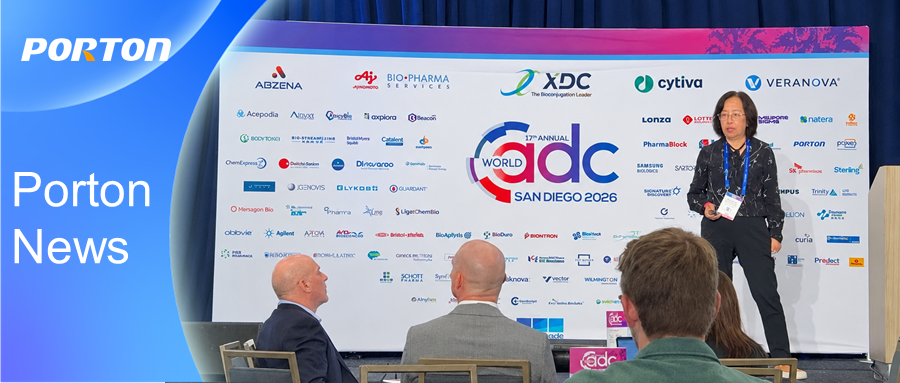
News 2026-10-24
Porton Shared Complex Bioconjugate Development Strategies at the 17th World ADC San Diego
As a conference partner, Porton contributed a scientific presentation and poster addressing the technical challenges of developing ADCs and emerging bioconjugates.

News 2026-10-22
Simplifying Synthesis with Radical Cross-Coupling: Prof. Phil S. Baran of Scripps Research Lectures at Porton
The event was hosted by Dr. Yongli Zhong, CSO, and attended by Mr. Oliver Ju, Chairman and CEO; Mr. Yunxing Yin, VP and Head of the Small Molecule Platform, and more than 200 R&D and technical staff.


