

News 2026-01-08
A Porton Publication in ACS Journal on Polymorphic Crystallization Kinetics Study and Control
Recently, Porton team published a peer-reviewed article in Crystal Growth & Design, a journal of the American Chemical Society (ACS), titled “Methodology of Crystallization Kinetics Investigation for Designing Isolation Process of Pure Metastable Polymorph.”
The paper presents a useful methodology to generate critical experimental data on polymorphic crystallization kinetics, enabling right-first-time process design and control for robust production of pure metastable polymorph. Conducted by Porton’s Global Chemical Engineering & Technology (GCET) department under the leadership of Dr. Jian Wang, this work represents another advancement in Porton’s particle engineering capabilities.

This study tackles a common challenge in controlling the critical quality attributes (CQAs) of active pharmaceutical ingredients (APIs): the formation of undesired polymorphs during crystallization. Isolating the pure metastable crystalline form can deliver benefits such as an improved dissolution profile and/or better downstream processability, yet it is typically more difficult than isolating the stable form. To enable right‑first‑time process design for robust API isolation, the authors present a practical methodology to generate critical fundamental data and mechanistic understanding of system thermodynamic and kinetic properties—information that is often scarce at the early stages of drug development.
Developed while addressing the separation of either member of a polymorphic pair with nearly overlapping solubility profiles, the methodology includes:
(a) Determining the critical transition temperature (Tt) of an enantiotropic polymorphic pair by measuring polymorphic conversion kinetics using in situ Raman spectroscopy;
(b) Assessing nucleation kinetics of the metastable polymorph at temperatures below Tt using a polythermal method. The resulting critical data enable rational process design and control to isolate a pure polymorph —
particularly the metastable form within a lower temperature range.

Figure 1. Schematic representation of knowledge-based routes for the isolation of a target polymorph.
As a leading global CDMO, Porton’s related research appears not only in Crystal Growth & Design (CG&D) but also in Organic Process Research & Development (OPRD) and other international journals. Committed to driving sustainable pharmaceutical R&D and manufacturing through technological innovation in small molecules, peptides, oligonucleotides, and other new types of drugs, Porton continues to provide innovative, reliable solutions to global partners, Enabling Earlier Access to Good Medicines.
About Porton Global Chemical Engineering & Technology (GCET) Department
The department serves as a synergistic, interdisciplinary technical center of excellence designed to advance process R&D and manufacturing of diverse drug substances (DS) and drug products (DP), through effective applications of chemical engineering and technologies. Headed by reputable subject matter experts (SMEs) with extensive experience from leading global pharmaceutical companies, GCET’s technical expertise encompasses the fields of Particle Engineering, Material Science & Engineering, Computational Chemistry & Data Science, Process Engineering, and Catalysis & Reaction Engineering. This multi-disciplinary team has been rigorously applying deep scientific understanding and advanced technical methodologies to debottleneck DS and DP process R&D and manufacturing. Integrated with other Porton teams, GCET empowers Porton to provide global drug development clients with high-quality and efficient technical solutions.
View the full document here: https://pubs.acs.org/doi/10.1021/acs.cgd.5c00888
Others
More
News 2026-09-30
Porton Newsletter - September, 2026 Recap
Porton Recognized by LyncBio Therapeutics for ADC Payload-Linker CMC Capabilities Porton Chongqing Liangjiang Drug Product Manufacturing Site Earns Recertification of ISO 14001 & ISO 45001 PMO Therapeutics: Technical Review and Manufacturing Platform Capabilities
News 2026-09-29
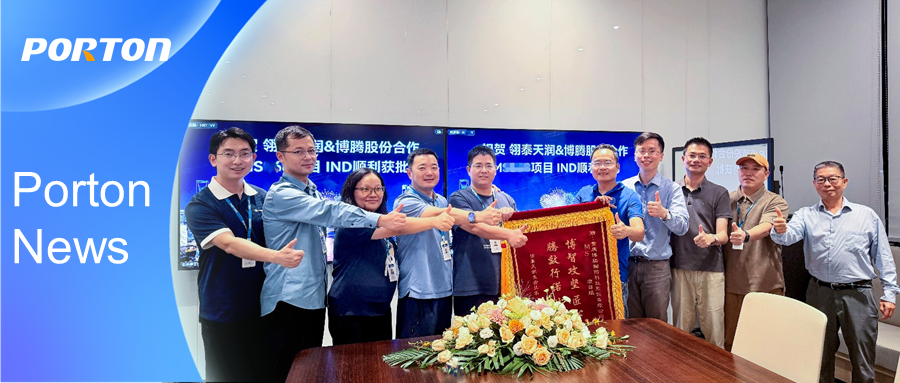
Porton Recognized by LyncBio Therapeutics for ADC Payload-Linker CMC Capabilities
Porton, as the project's CDMO partner, completed process development and manufactured non-GMP toxicology batches and GMP clinical trial materials for LYNC-101's payload-linker.


